




Great Reasons to Buy a Used Jeep Wrangler Rubicon
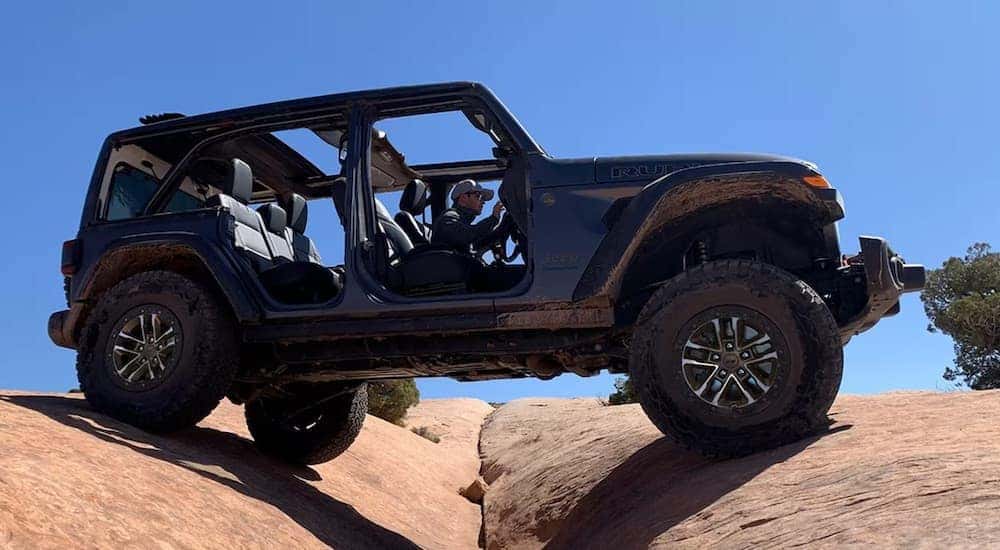
When it comes to buying a pre-owned vehicle, a used Jeep for sale is a fantastic choice for drivers who need a capable vehicle. The Wrangler Rubicon is an especially capable off-road SUV. An off-roading vehicle is more likely to see undercarriage damage, rust, and other dents and dings that could be problematic down the line. That’s why you’ll want to shop for a Jeep Wrangler Rubicon. Not only will it be capable of leaving the pavement behind on your next grand adventure, but it’s also a durable vehicle, ready to take on the great outdoors.
If you’re an aspiring off-roader, buying a used Jeep Wrangler Rubicon could be your entry into an amazing world of tough terrain and adrenaline. Let’s take a look at the Rubicon in greater depth to see why we’re such big fans of this trim and how finding a used Wrangler Rubicon could be your way off the pavement for good.
What Makes the Rubicon So Special?
For many of us, the Jeep Wrangler Rubicon feels like such an American institution that it must have been part of the lineup forever. In fact, the Rubicon was introduced for the 2003 model year and had been many years in the making.
Named after one of the most vicious trails in northern California, the Rubicon was designed to be the pinnacle of the Wrangler experience. It doesn’t necessarily have more power than other Wranglers. In fact, the first-ever Wrangler Rubicon used the same 4.0L inline six-cylinder engine as the rest of the lineup, with a choice of a 5-speed manual or a 4-speed automatic transmission, which was new for 2003.
The Rubicon trim was also not designed to be a luxurious vehicle. In the early days, it came with a few extra-special features, like a leather-wrapped steering wheel and a cassette player-stereo with CD changer controls, but air conditioning, cruise control, and the actual CD player were extra options.
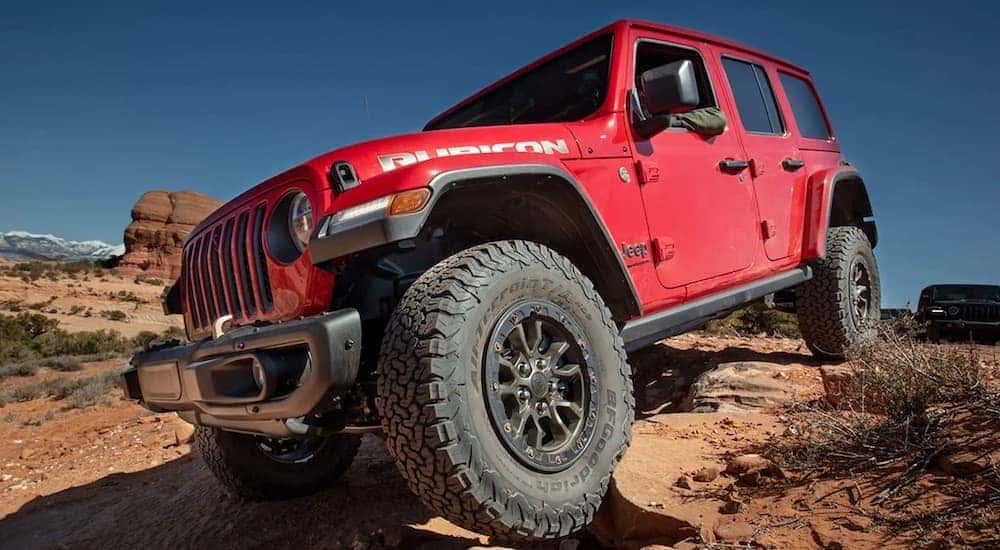
Instead, the Rubicon is the Wrangler you want when climbing rocks, crawling crags, fording streams, and blasting through sand. That means a super-articulate 4:1 low-range gear ratio, Dana 44 axles, specialized air lockers, and a steady first-gear low crawl. Its engine’s air intake is strategically placed so that it can cross water without choking, and it stands tall with off-road tires, specially designed bumpers and fender flares, and plenty of protection for its undercarriage.
The Origin of the Wrangler Rubicon
The Jeep Wrangler Rubicon’s backstory is possibly one of the best origin stories across the Jeep brand, and it’s one of the most interesting in automotive history.
The idea started with the 1997 Wrangler, known as the TJ model, which featured a multi-link coil spring front and rear suspension that made it ideal for driving over anything. It wasn’t long before serious off-roaders discovered they could buy a Wrangler, lift the suspension, put new wheels and all-terrain tires on it, outfit it with a new transfer case and lockers, and make the exact off-road warrior vehicle of their dreams.
It soon became abundantly clear that if Jeep didn’t manufacture a version of the Wrangler to meet off-roaders’ standards, then the off-roaders would keep taking care of it themselves. At the time, Jeep was part of the Chrysler Corporation, as was a brand known as Mopar, which makes some of the most sought-after OEM and aftermarket automotive gear. Since Jeep had access to Mopar’s excellent accessories, parts, and engineering, it was time to create its own off-road contender.
At the same time, there weren’t a lot of off-roaders who worked at Chrysler in the 1990s. Two engineers on the Wrangler TJ team—Dave Yegge and Mike Gabriel—were largely responsible for driving the development of the Rubicon trim by equipping a Wrangler with their ideal transfer case and then driving the company’s principal executives up California’s Rubicon trail. The improved ride from just that one update was enough to persuade Jeep’s top brass that a highly-adapted off-road-exclusive trim might be just the thing the Wrangler lineup needed.
In its first year of production, just over 10,000 Jeep Wrangler Rubicons were produced in the Toledo plant. While exact numbers of Rubicon sales aren’t available, Jeep revealed in 2023 that it had sold over five million Wranglers. Clearly, the market was craving an off-road beast, and the Wrangler Rubicon marked the first major foray into what is now one of the most popular segments in the country.
Notable Instances of the Rubicon
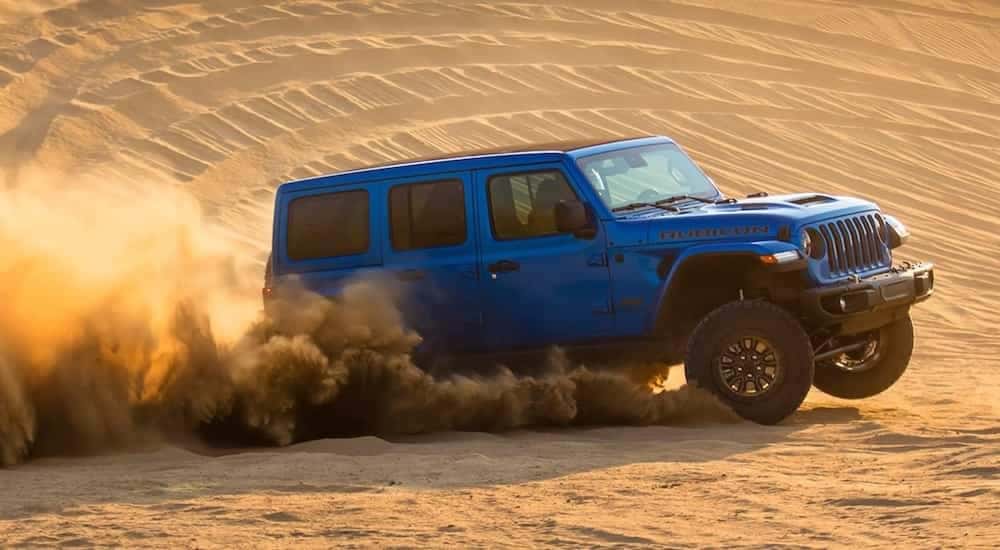
Since its first year of production, the Wrangler Rubicon has undergone scores of changes and updates. Things like the 4:1 low-range four-wheel drive system, custom Rubicon-tuned terrain-eating suspension, and enormous off-road tires have remained the same over the years, but other factors have changed. For example, the cassette player is no longer an option.
In 2020, the Jeep Wrangler Unlimited Rubicon appeared on the scene, with the term “Unlimited” largely referring to its size: a longer wheelbase allowed this Wrangler to be a 4-door model with 31.7 cu.ft. of cargo space while still seating five people—perfect for a weekend in the wild. Its turbocharged 3.0L V6 EcoDiesel engine supplied more torque at 442 lb-ft than any other Wrangler engine at the time. Dana 44 axles, Tru-Lok electronic remote-locking differentials in the front and rear, Rock-Trac heavy-duty 4WD system, and a power-operated convertible top make it an excellent choice for those who want to go far into the depths of nature.
The performance-oriented Wrangler Rubicon 392 variant was introduced as a limited edition in 2021—and although the Rubicon 392 Final Edition was announced for 2024, Jeep has confirmed that the 2025 model year will be the last call for Rubicon 392s. Equipped with a 6.4L V8 engine that provides 470 hp and 470 lb-ft of torque, the Wrangler Rubicon 392 stands over an inch taller than other Rubicons, with stiffer front springs and softer rear springs—and to say this made the greatness of Rubicon even better is an understatement. Drivers looking for a hardcore off-road warrior that’s ready to tackle the toughest trails the minute you slide behind the wheel might try to find an older 392—that is, if the current owner is really willing to let it go.
Nothing Compares to the Wrangler Rubicon
Over the years, drivers have come to understand that choosing the Rubicon trim of the Jeep Wrangler will provide them with off-roading prowess beyond their wildest imaginations. Though some of the details of the Wrangler Rubicon have changed over the past two decades, the vision brought forth by Yegge and Gabriel remains unaltered.
The Wrangler Rubicon isn’t necessarily ideal as a daily driver, and experts have long been unmoved by its performance on the pavement. But those who are looking to climb higher, drive further, and explore more of the wilderness than ever before may look to a used Wrangler Rubicon to help them leave the city behind.
And while models who have seen some action may have a few pings and dings, the important thing is that they return to tell the tale… and they’re ready to try it again.
0 comment(s) so far on Great Reasons to Buy a Used Jeep Wrangler Rubicon